page

Measurement Finder

Not sure how to figure out the curtains' sizes? Choose the curtain type, and follow our guide to answer a few questions. We will figure out the suitable size for you.

Drapery Measuring Instruction

Simplify your curtain measuring process with our Measurement Finder, designed to guide you effortlessly through each step for a smooth, hassle-free experience. For a more in-depth, professional measurement, we’ve also prepared a detailed guide for you below.
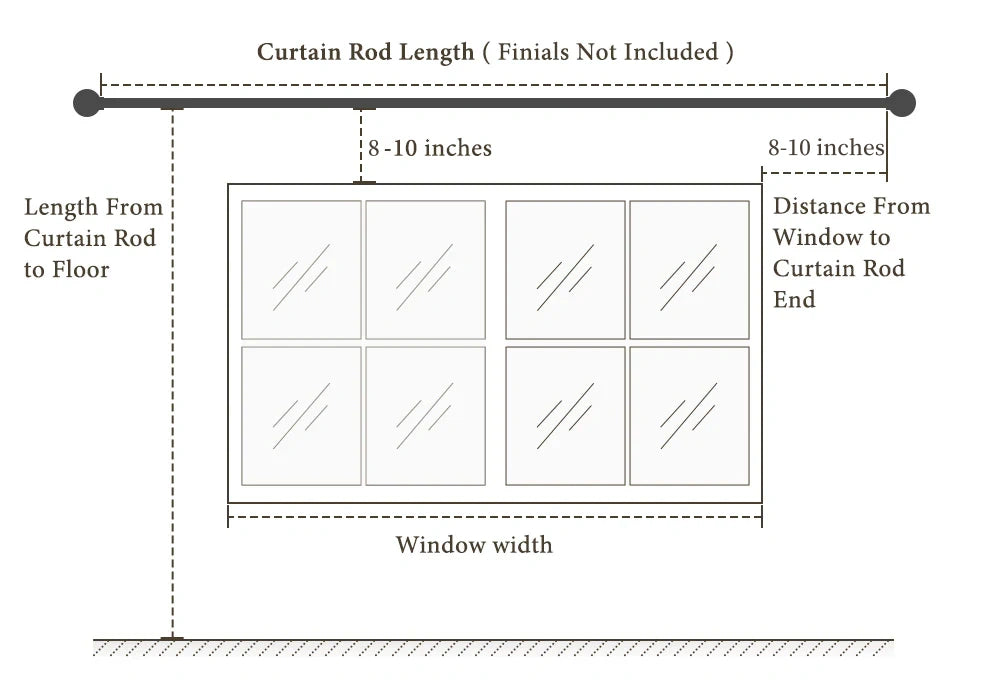
  • Step 1: Measure the Curtain Rod Width and Placement

    If you have installed a curtain rod, measure the length of the rod.

    If a curtain rod is not installed, first check where the curtain rod will be installed above and to the sides of the window frame. Consider how high you want the rod to be to create the desired visual effect.
  • Step 2: Know EASEEASE Standard Fullness

    Pleated, Ripple Fold, and French-style Ruffled Top headers

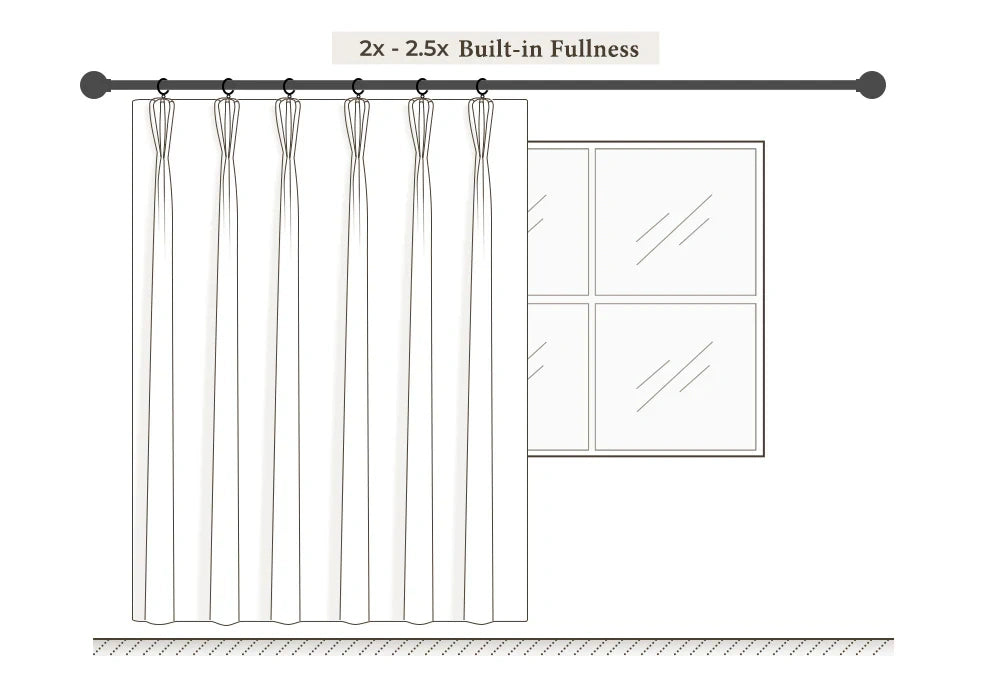
    To prevent your drapes from looking flat like a stretched sheet, it’s important to consider adding fullness for extra width. We use 200-250% fabric fullness to create the pleats, ensuring the curtains have a rich and luxurious appearance.

    • 2x Fullness for Double Pleat and French-style Ruffled Top
    • 2.3x - 2.5x Fullness for Triple Pleat and Ripple Fold

    Other Headers

    The default fullness is 1 (or 100%), then you should consider multiply 150-200% fullness for final measured width. 150% fullness will produce a more tailored look, while 200% fullness, which is recommended will create a richer appearance.

  • 1.0X Fullness

  • 1.5X Fullness

  • 2.0X Fullness

1 of 3

Pleated Header

Per Panel Width When Pleats Are Sewn = the Width You Ordered

  • For instance, if your rod is 100" , you would order two panels, each panel 50" wide for Pleat heading style.
  • The width of the drapery panel is measured from the first pleat on the left to the last pleat on the right when the curtain is fully extended, not when it's stacked.
  • The length is measured from the top to the bottom of the curtain.
  • The fabric fullness: Double 200% , Triple 230%-250%
  • When stacked, the curtain width will be about 15~20% of the width you ordered.
  • The pleats are sewn in place and cannot be adjusted.
Calculate Pleats

Ripple Fold

  • Finished Width in Inch = Your Ordered Width
  • The width you specify will be the finished width with the ripple waves.
  • Finish width measures the drapery panel after the ripple folds are made, not when the fabric is fully stretched.

Available in panel or pair choice, for example, when track length is 100":

  • If you select panel, and specify the width in 100", you will receive a single panel of 100 inches curtain(finished width after ripples are created).
  • Fabric fullness: 250%
  • 10-15 inches when stacked(account for 20-30% of panel width you order)
  • Length is measured from the hook on the track to the bottom.

Grommet Header

Single Panel Width when fully extended = Your Order Width

  • For example, if your rod length is 100“, for grommet header style, if you choose 2x fullness and split panels, the total width you need is 100”*200% = 200“, then you need to order 2 panels, each 100 inches width.
  • Length should be measured from the TOP of the rod down to your preferred end point.
  • Grommet 1.6 inches inner diameter.
  • Recommended Fabric fullness: 200%
  • Stacked width accounts for around 20% of panel width after folds.
Calculate Grommets

Soft Top Header

Per Panel Width When fully extended = the Width You Ordered
  • Including Back Tab, Rod Pocket, and Tab Top Header
  • For instance, if your curtain rod is 100" and you want 200% fullness for pleats, order two panels. Each panel should be 100" wide, totaling 200" for Soft Top Back Tab heading style.
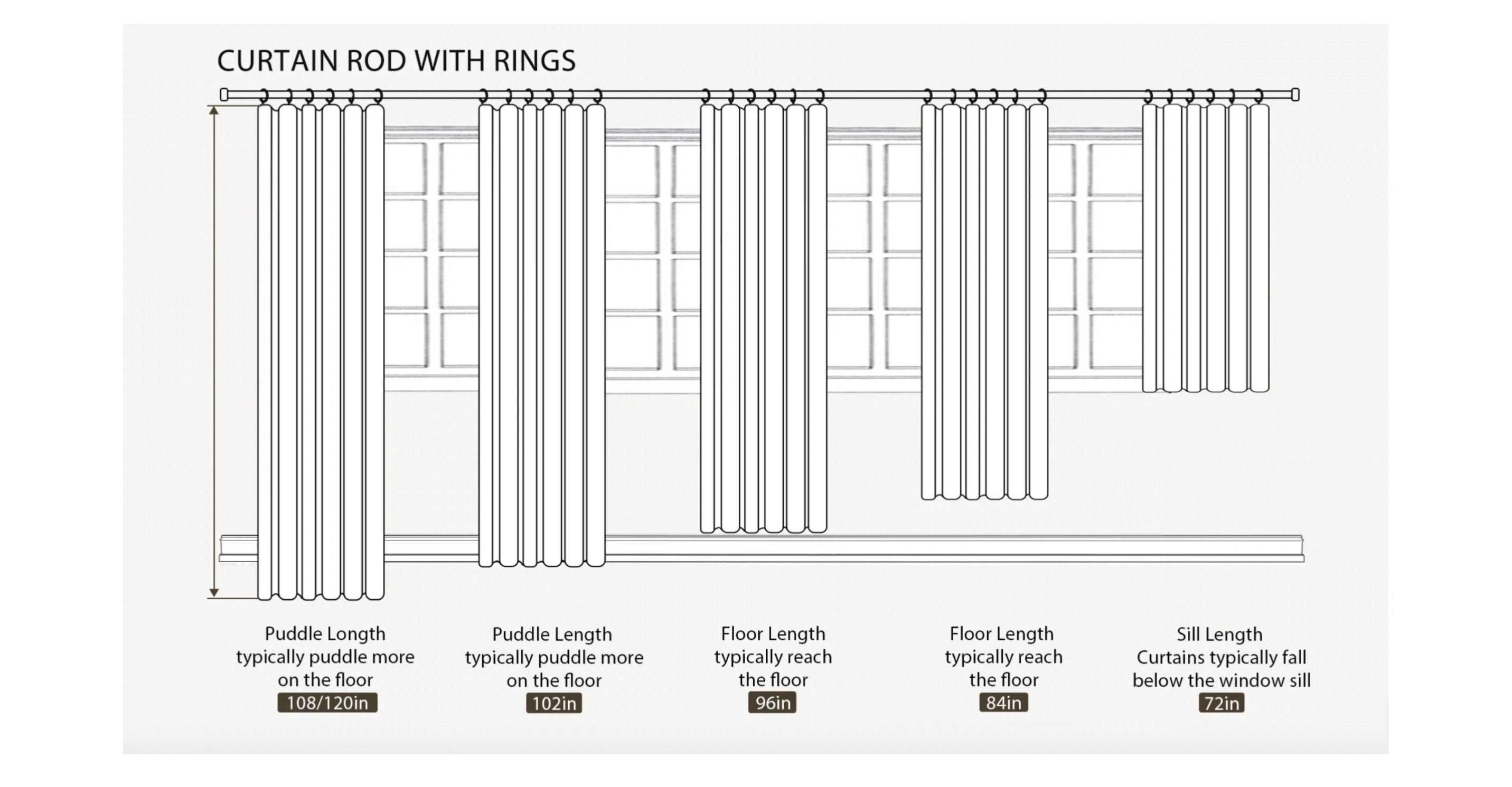
  • The length is measured from the TOP of rod to the bottom of the curtain.
  • Recommended fabric fullness: 200%.
  • When stacked, the curtain width will reduce to approximately 15–20% of the width you ordered.

Finding The Perfect Fit

Shades Measuring Instruction

Before you focus on how to measure windows for blinds or shades, you must decide which type of mounting is right for you.

  • Inside Mount Your Window Treatments When:

    • Enough window depth for inside mount (at least 2").
    • To get a sleek and minimalist aesthetic for your space.
    • The window trim is visually appealing and should be highlighted rather than concealed.
    • You prefer window treatments that blend seamlessly with the wall without protruding.
    • The windows have sturdy frames capable of supporting the mounting hardware.
    • The house is relatively new, with well-shaped rectangular windows.
    • The window sill extends outward, complicating the use of an outside mount.
  • Outside Mount Your Window Treatments When:

    • The window depth is not enough, also is irregularly shaped, unsuitable for an inside mount.
    • The objective is to cover unattractive window trim and refresh the window’s appearance.
    • Maximum light-blocking capability is required when the shades are drawn.
    • The window frame is too fragile or shallow to support an inside mount.
    • Privacy is a primary concern, and the shades need to block external view when closed.
    • The goal is to create the impression of taller, larger windows.
    • When rolled up, the window treatment should be as unobtrusive as possible.

Measure the Window for Inside Mount

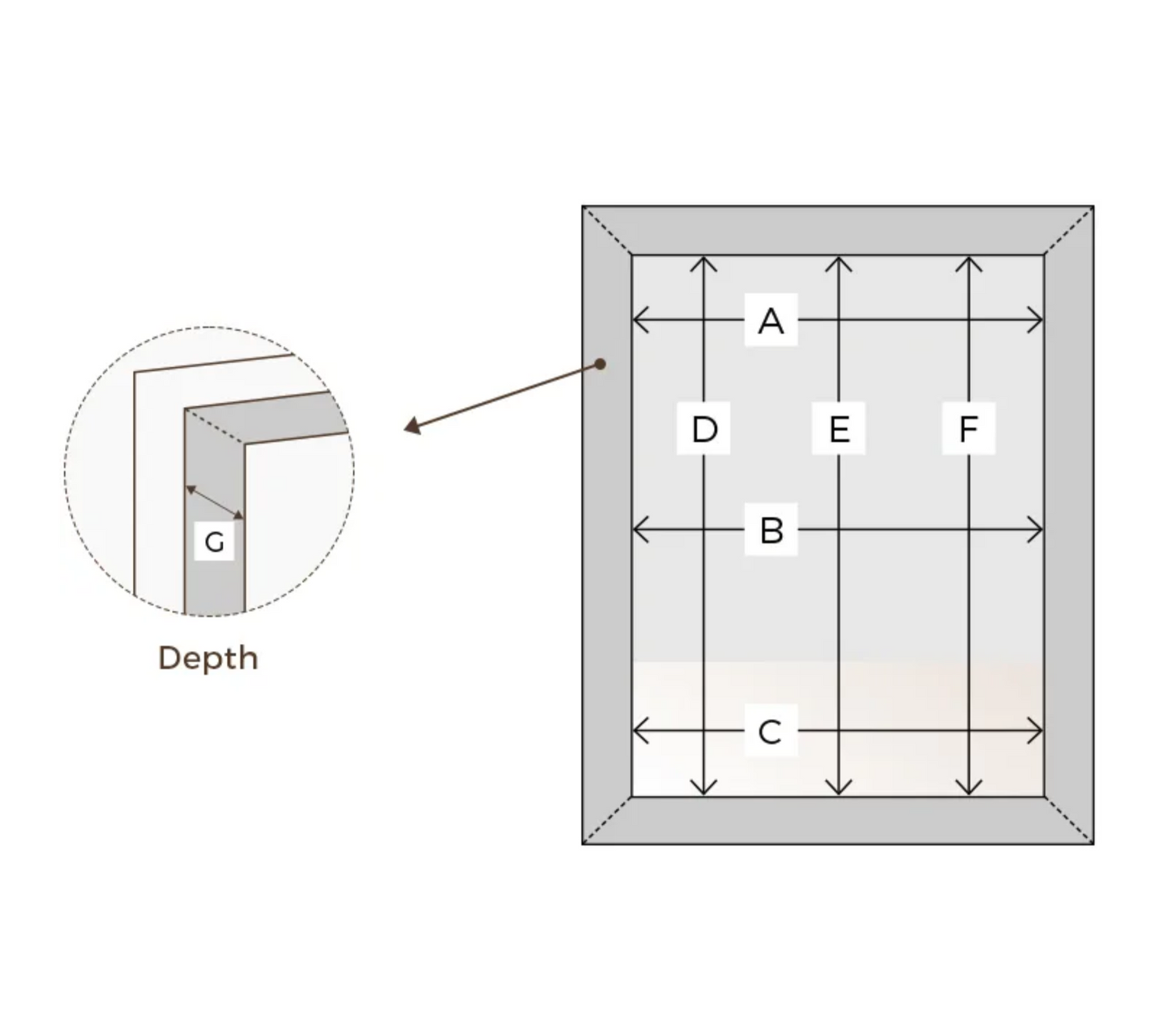
  • Depth: Measure inside casing depth at the top for inside or flush mount suitability. Depth needs vary by shade.
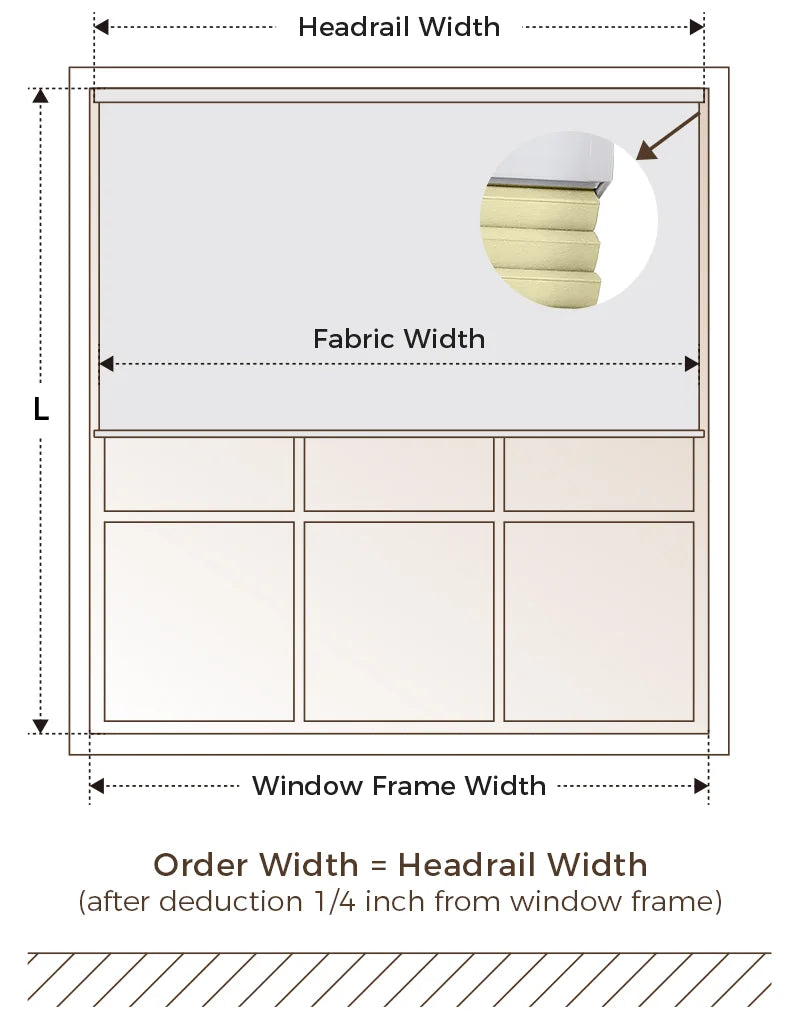
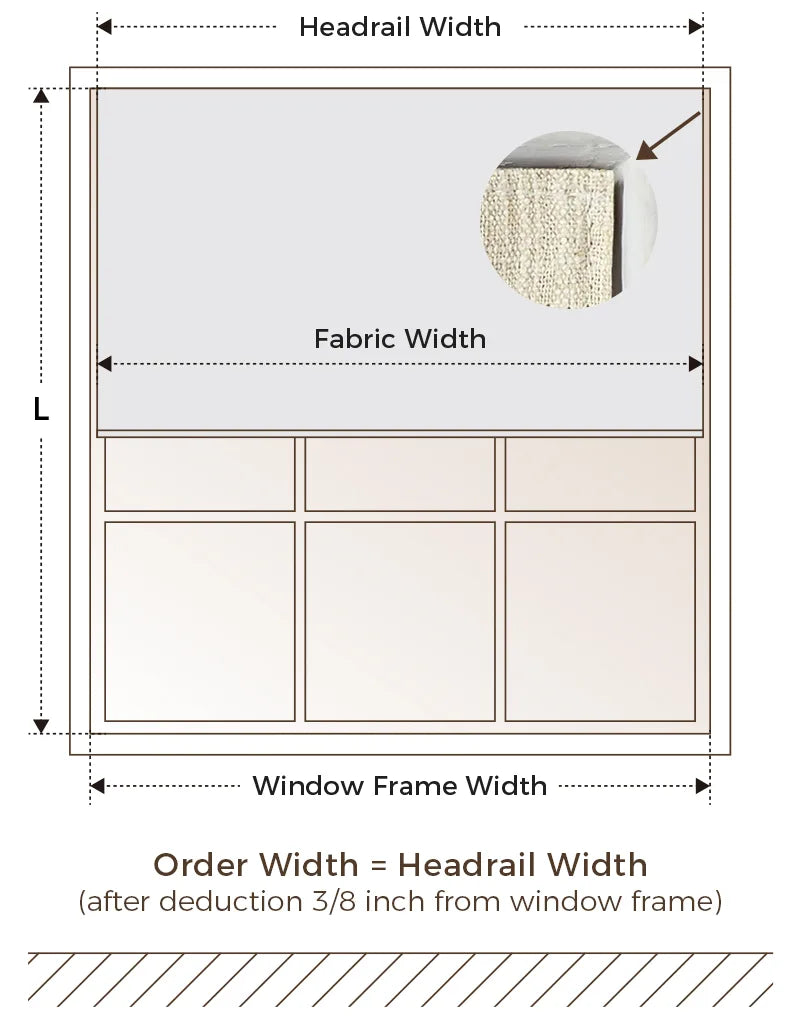
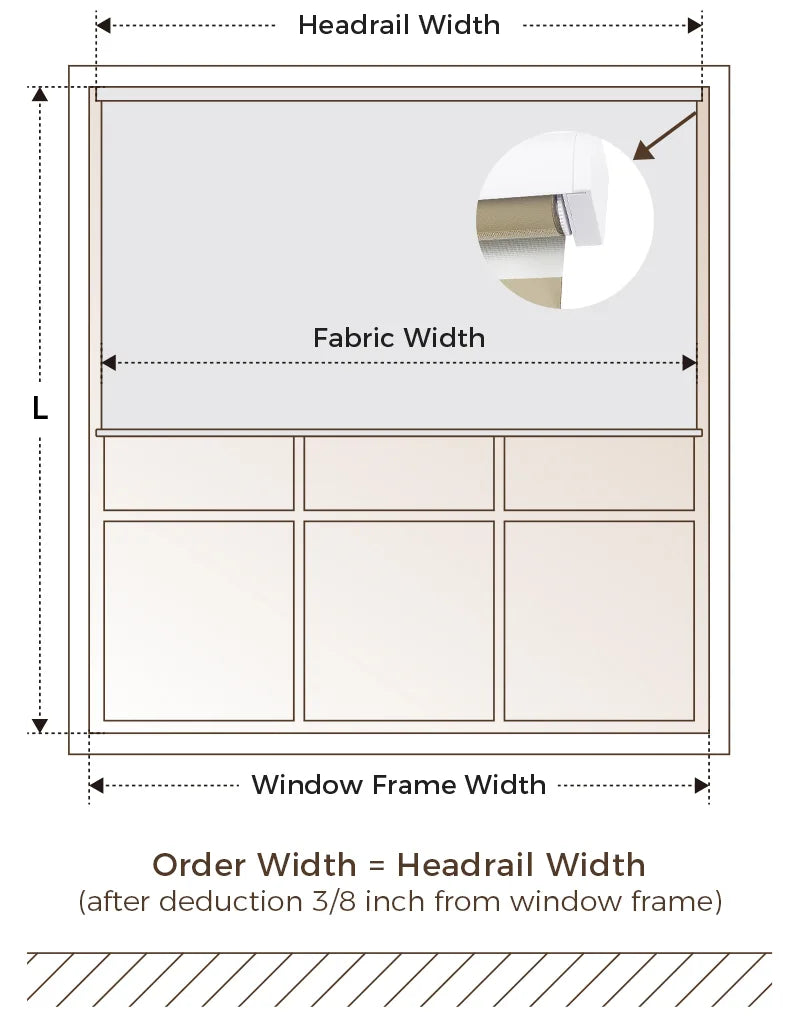
  • Width: Measure top, middle, and bottom; round down to the nearest 1/8 inch.
  • Length: Measure left, center, and right; round up to the nearest 1/8 inch, using the largest measurement.
1 of 3

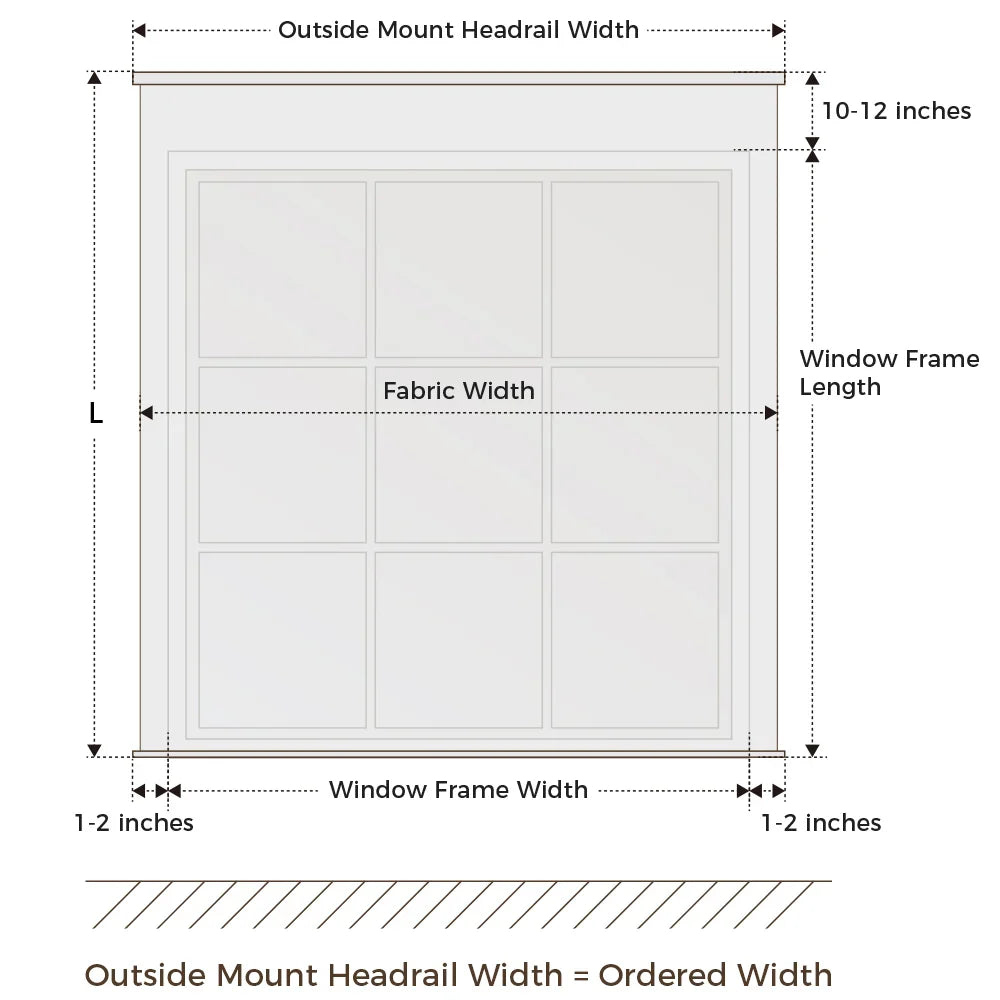
Measure the Window for Outside Mount

  • Check Space: Measure the height above the window to ensure enough room for secure headrail and bracket installation.
  • Width: Measure the window's outer frame width. Add 2-4 inches total to reduce light gaps if space allows—this is your ordering width.
  • Length: Measure the window's outer frame height. Mount 10-12 inches above the frame, if possible, to account for stack height and maximize exposure.