
How to Measure Curtains & Shades
Not sure how to figure out the curtains' sizes? Choose the curtain type, and follow our guide to answer a few questions. We will figure out the suitable size for you.


Drapery Measuring Instruction
Simplify your curtain measuring process with our Measurement Finder, designed to guide you effortlessly through each step for a smooth, hassle-free experience. For a more in-depth, professional measurement, we’ve also prepared a detailed guide for you below.
How to Measure Curtains — Quick Answer
To measure curtains, measure the curtain rod width (not the window), then multiply by 1.5–2× for fullness to get your total panel width. Mount the rod 6–8" above the window frame and extend it 6–12" past each side. For length, measure from the top of the rod to the floor and finish about 0.5" off the floor for a clean look, or add 1–3" to puddle.
- Width: rod width × 1.5–2 (e.g. 100" rod → 150–200" of curtain).
- Panels: divide total width by 2 for a pair (split-draw) look.
- Length: top of rod → floor; 0.5" clearance standard.
- Rod placement: 6–8" above frame, 6–12" beyond each side.
-
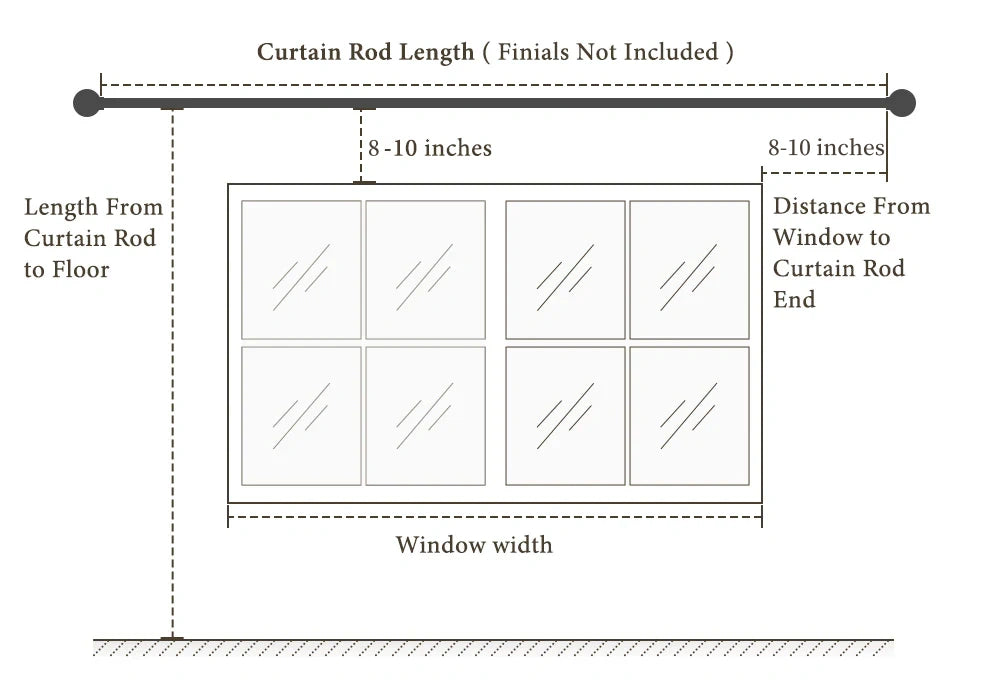
Step 1: Measure the Curtain Rod Width and Placement
If you have installed a curtain rod, measure the length of the rod.
If a curtain rod is not installed, first check where the curtain rod will be installed above and to the sides of the window frame. Consider how high you want the rod to be to create the desired visual effect.
-

Step 2: Know EASEEASE Standard Fullness
Pleated, Ripple Fold, and French-style Ruffled Top headers
To prevent your drapes from looking flat like a stretched sheet, it’s important to consider adding fullness for extra width. We use 200-250% fabric fullness to create the pleats, ensuring the curtains have a rich and luxurious appearance.
- 2x Fullness for Double Pleat and French-style Ruffled Top
- 2.3x - 2.5x Fullness for Triple Pleat and Ripple Fold
Other Headers
The default fullness is 1 (or 100%), then you should consider multiply 150-200% fullness for final measured width. 150% fullness will produce a more tailored look, while 200% fullness, which is recommended will create a richer appearance.

-

1.0X Fullness
-

1.5X Fullness
-

2.0X Fullness


Pleated Header
Per Panel Width When Pleats Are Sewn = the Width You Ordered
- For instance, if your rod is 100" , you would order two panels, each panel 50" wide for Pleat heading style.
- The width of the drapery panel is measured from the first pleat on the left to the last pleat on the right when the curtain is fully extended, not when it's stacked.
- The length is measured from the top to the bottom of the curtain.
- The fabric fullness: Double 200% , Triple 230%-250%
- When stacked, the curtain width will be about 15~20% of the width you ordered.
- The pleats are sewn in place and cannot be adjusted.

Ripple Fold
- Finished Width in Inch = Your Ordered Width
- The width you specify will be the finished width with the ripple waves.
- Finish width measures the drapery panel after the ripple folds are made, not when the fabric is fully stretched.
Available in panel or pair choice, for example, when track length is 100":
- If you select panel, and specify the width in 100", you will receive a single panel of 100 inches curtain(finished width after ripples are created).
- Fabric fullness: 250%
- 10-15 inches when stacked(account for 20-30% of panel width you order)
- Length is measured from the hook on the track to the bottom.

Grommet Header
Single Panel Width when fully extended = Your Order Width
- For example, if your rod length is 100“, for grommet header style, if you choose 2x fullness and split panels, the total width you need is 100”*200% = 200“, then you need to order 2 panels, each 100 inches width.
- Length should be measured from the TOP of the rod down to your preferred end point.
- Grommet 1.6 inches inner diameter.
- Recommended Fabric fullness: 200%
- Stacked width accounts for around 20% of panel width after folds.

Soft Top Header
Per Panel Width When fully extended = the Width You Ordered
- Including Back Tab, Rod Pocket, and Tab Top Header
- For instance, if your curtain rod is 100" and you want 200% fullness for pleats, order two panels. Each panel should be 100" wide, totaling 200" for Soft Top Back Tab heading style.
- The length is measured from the TOP of rod to the bottom of the curtain.
- Recommended fabric fullness: 200%.
- When stacked, the curtain width will reduce to approximately 15–20% of the width you ordered.
Header Style Comparison — How Order Width Works
| Header Style | What “Order Width” Means | Recommended Fullness | Stacked Width |
|---|---|---|---|
| Pinch Pleat | Order = finished sewn width per panel (e.g. 100" rod → two 50" panels). | Double 200% / Triple 230–250% | ~15–20% of ordered width |
| Ripple Fold | Order = finished width after ripples (the width you specify is what you get). | 250% | ~20–30% of panel width |
| Grommet | Order = fully-extended panel width; split panels for a pair (rod × fullness ÷ 2). | 200% (1.6" grommet inner Ø) | ~20% of panel width |
| Soft Top (Back Tab / Rod Pocket / Tab Top) | Order = fully-extended width per panel (e.g. 100" rod, 200% → two 100" panels). | 200% | ~15–20% of ordered width |
Tip: Fullness is the multiplier that prevents drapes from looking flat. Lighter fabrics need more fullness; heavier fabrics fold well with less.
Not sure which header to pick? Read our guide: How to Choose a Drapery Header Style →
Scope & What This Guide Does Not Cover
These instructions apply to standard rectangular windows measured in inches for custom (made-to-measure) curtains and shades. They are not sizing rules for ready-made/standard-panel curtains, and they do not replace the specific ordering width for each header style (see the comparison above). For arched, bay, corner/L-shaped, skylight, or extra-wide/extra-long windows, follow our dedicated guides, and when in doubt use EaseEase’s Free Design Service — we verify every measurement before production.
Finding The Perfect Fit

Shades Measuring Instruction
Before you focus on how to measure windows for blinds or shades, you must decide which type of mounting is right for you.
-

Inside Mount Your Window Treatments When:
- Enough window depth for inside mount (at least 2").
- To get a sleek and minimalist aesthetic for your space.
- The window trim is visually appealing and should be highlighted rather than concealed.
- You prefer window treatments that blend seamlessly with the wall without protruding.
- The windows have sturdy frames capable of supporting the mounting hardware.
- The house is relatively new, with well-shaped rectangular windows.
- The window sill extends outward, complicating the use of an outside mount.
-

Outside Mount Your Window Treatments When:
- The window depth is not enough, also is irregularly shaped, unsuitable for an inside mount.
- The objective is to cover unattractive window trim and refresh the window’s appearance.
- Maximum light-blocking capability is required when the shades are drawn.
- The window frame is too fragile or shallow to support an inside mount.
- Privacy is a primary concern, and the shades need to block external view when closed.
- The goal is to create the impression of taller, larger windows.
- When rolled up, the window treatment should be as unobtrusive as possible.


Measure the Window for Inside Mount
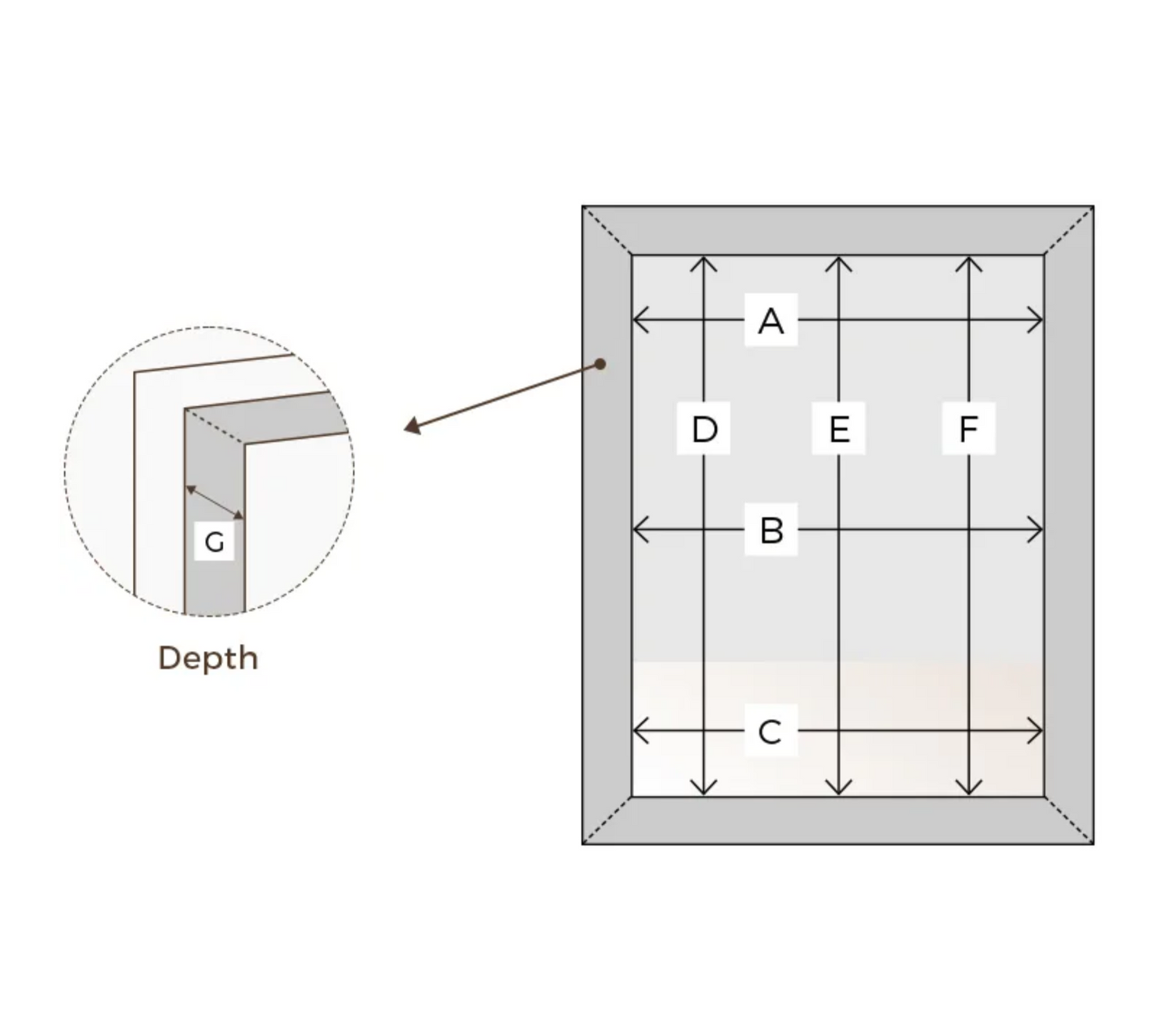
- Depth: Measure inside casing depth at the top for inside or flush mount suitability. Depth needs vary by shade.
- Width: Measure top, middle, and bottom; round down to the nearest 1/8 inch.
- Length: Measure left, center, and right; round up to the nearest 1/8 inch, using the largest measurement.
Note on Deduction
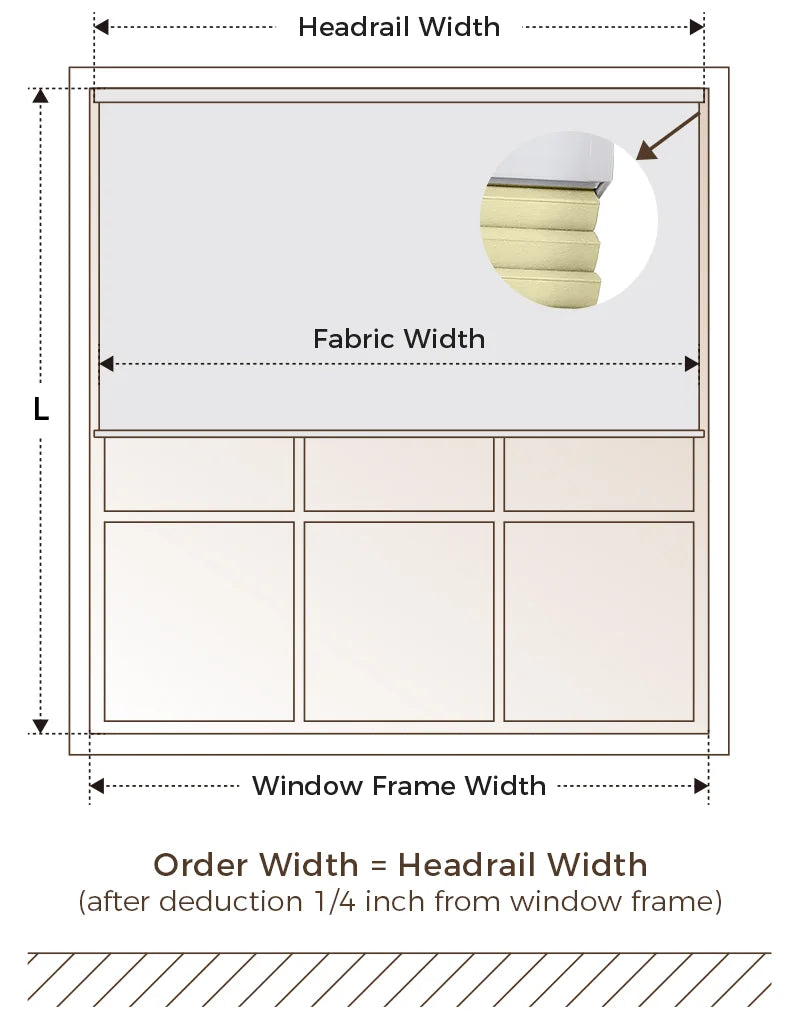
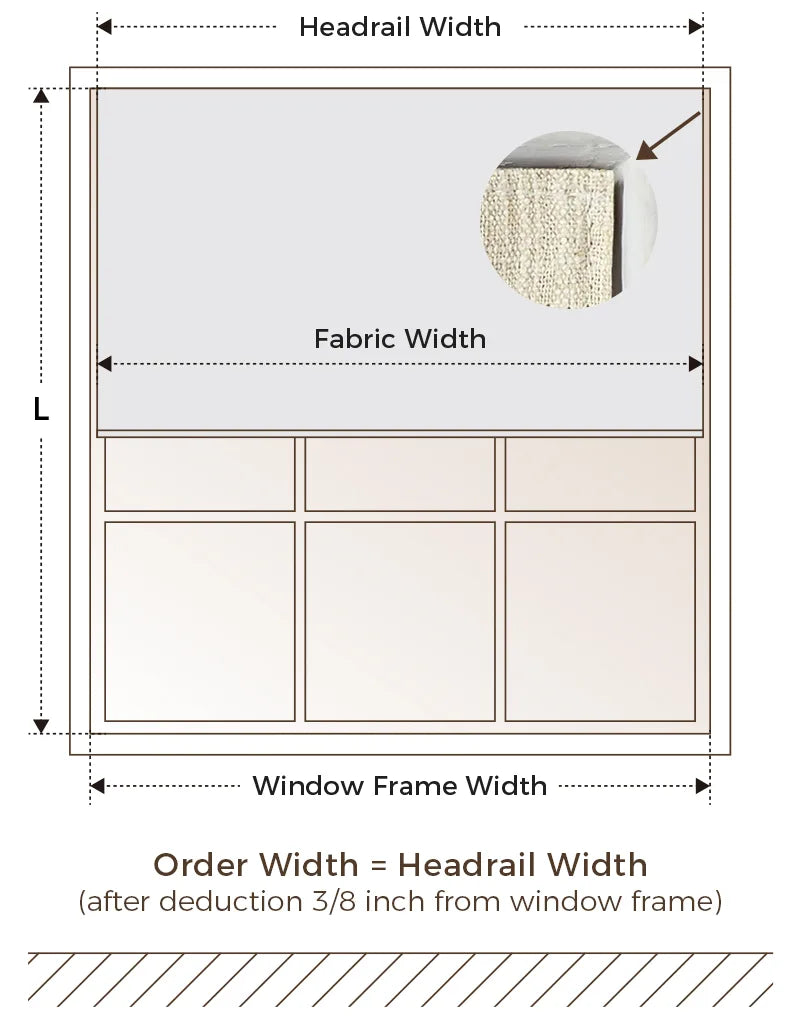
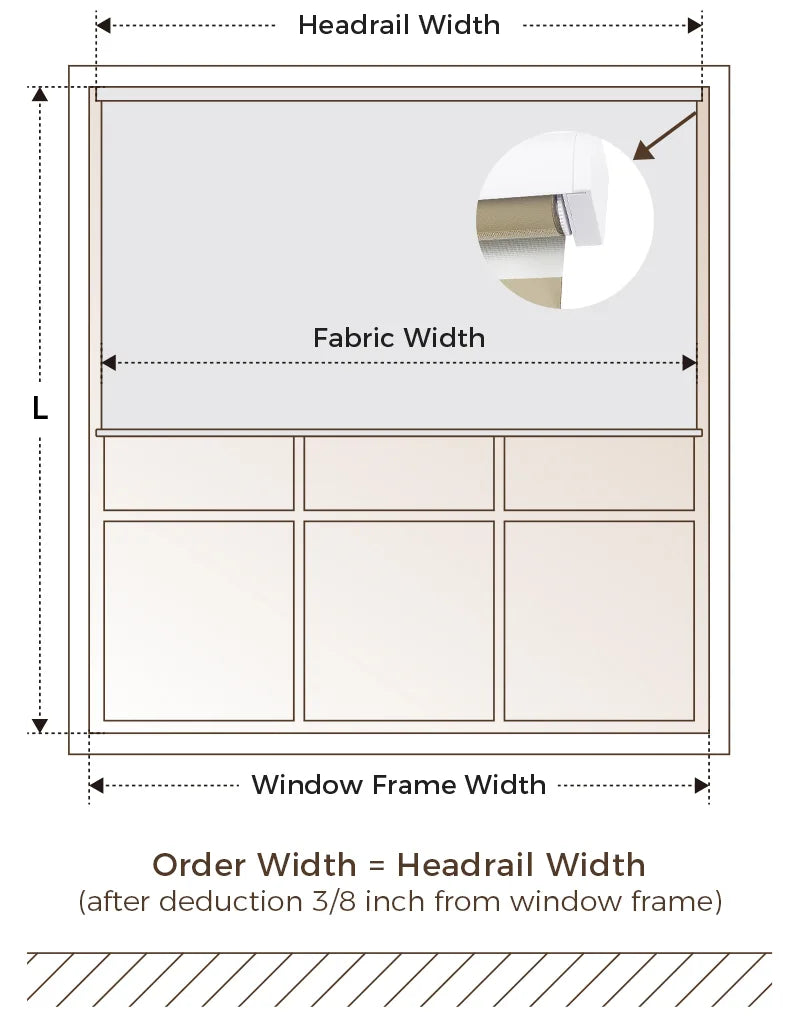
Inside-Mount Deduction by Shade Type
| Shade Type | Width Deduction (Inside Mount) | Height / Length |
|---|---|---|
| Cellular / Venetian Shades | − 1/4" | No deduction |
| Roller / Zebra Shades | − 1/4" | No deduction |
| Roman / Bamboo Shades | − 3/8" | No deduction |
We apply these factory deductions automatically for inside-mount shades so the finished shade fits inside the window opening. Measure and submit the exact opening size — do not subtract anything yourself.
Measure the Window for Outside Mount
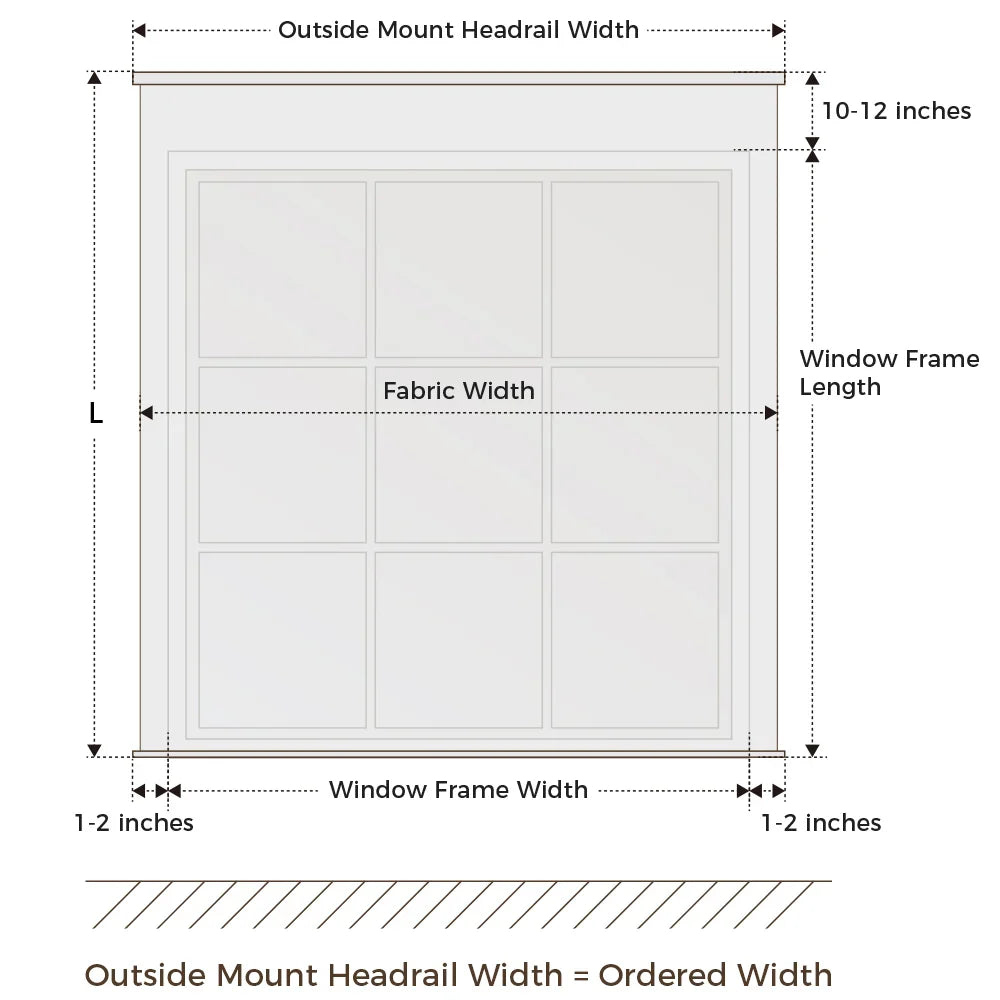
- Check Space: Measure the height above the window to ensure enough room for secure headrail and bracket installation.
- Width: Measure the window's outer frame width. Add 2-4 inches total to reduce light gaps if space allows—this is your ordering width.
- Length: Measure the window's outer frame height. Mount 10-12 inches above the frame, if possible, to account for stack height and maximize exposure.
How to Measure Odd-Shaped Windows & Shades
Arched, angled, and triangular windows can’t use one straight measurement — capture the widest width, the tallest height, and any key angle or curve radius, then choose an inside or outside mount.

Three Ways to Dress an Odd-Shaped Window
- Custom Curtains — hung inside the arch, or from a track at the apex of a triangle window.
- Honeycomb (Cellular) Shades — cut to the exact curve or angle, from sheer to full blackout.
- Custom Shutters — built to the window’s exact shape for the strongest light control and privacy.
Need help with your exact window?
Every odd-shaped window is unique. For exact measuring help or a made-to-measure template, reach our design team directly:
Text: +1 (689) 231-1581 | Email: support@easeeasecurtains.com
Read the Full Odd-Shaped Windows GuideCurtain & Shade Measuring FAQ
How wide should curtains be compared to the window?
Curtains should be 1.5–2× the curtain rod width, so a 60" rod needs 90–120" of total panel width for full, even folds.
Do I measure the window or the curtain rod?
Always measure the curtain rod (not the window), because the rod extends past the frame and determines your true finished width.
How many curtain panels do I need?
For a center-split pair, divide your total required width by two; for one-way draw on narrow windows a single panel is enough.
How high above the window should I hang the rod?
Mount the rod 6–8" above the window frame (or near the ceiling for low headers) to make the window look taller.
How far off the floor should curtains be?
Finish about 0.5" above the floor for a clean “kiss” look, or add 1–3" if you want the fabric to puddle.
What is the difference between inside and outside mount for shades?
Inside mount sits inside the frame for a sleek built-in look and needs at least ~2" of depth, while outside mount installs on the wall to maximize coverage and block light.
For custom curtains, do I order the rod width or the finished width?
It depends on the header: pleated and ripple-fold orders use the finished (sewn) width, while grommet and soft-top orders use the fully-extended width × your fullness.
How do I measure for an extra-wide or odd-shaped window?
Split the width across multiple panels and use our Free Design Service to verify sizing for bay, corner/L-shaped, arched, or extra-long windows before ordering.
EaseEase Curtain Tips & Tricks
View all-

How to Choose Floral Curtains That Don’t Look Cheap
Discover expert tips on selecting floral curtains that look luxurious.
How to Choose Floral Curtains That Don’t Look Cheap
Discover expert tips on selecting floral curtains that look luxurious.
-

How to Install Curtains on L Shaped Windows? (2026 Complete Corner Windows Guide with Real Examples)
Learn how to install curtains on L-shaped windows without light leaks.
How to Install Curtains on L Shaped Windows? (2026 Complete Corner Windows Guide with Real Examples)
Learn how to install curtains on L-shaped windows without light leaks.
-

Blackout Curtains for Nursery: Don’t Let 6AM Light Ruin Your Baby’s Sleep Training
Struggling with early wake-ups? Discover how blackout curtains for nursery block 6AM light, support sleep training, and create a dark nursery for better baby sleep.
Blackout Curtains for Nursery: Don’t Let 6AM Light Ruin Your Baby’s Sleep Training
Struggling with early wake-ups? Discover how blackout curtains for nursery block 6AM light, support sleep training, and create a dark nursery for better baby sleep.
-

Why Does Your Roman Rod Always Sag? Causes, Prevention, and Buying Guide
By following these three key points, you’ll never have to worry about sagging Roman rods again.
Why Does Your Roman Rod Always Sag? Causes, Prevention, and Buying Guide
By following these three key points, you’ll never have to worry about sagging Roman rods again.


