
How to Measure Shades
Shades are measured from the window opening, and inside mount and outside mount need different numbers. Use the finder below, or follow the full step-by-step guide to get the exact size to order. Measuring curtains or drapes instead? See How to Measure Curtains.


Shades Measuring Instruction
How to Measure Shades — Quick Answer
-

Inside Mount Your Window Treatments When:
- Enough window depth for inside mount (at least 2").
- To get a sleek and minimalist aesthetic for your space.
- The window trim is visually appealing and should be highlighted rather than concealed.
- You prefer window treatments that blend seamlessly with the wall without protruding.
- The windows have sturdy frames capable of supporting the mounting hardware.
- The house is relatively new, with well-shaped rectangular windows.
- The window sill extends outward, complicating the use of an outside mount.
-

Outside Mount Your Window Treatments When:
- The window depth is not enough, also is irregularly shaped, unsuitable for an inside mount.
- The objective is to cover unattractive window trim and refresh the window’s appearance.
- Maximum light-blocking capability is required when the shades are drawn.
- The window frame is too fragile or shallow to support an inside mount.
- Privacy is a primary concern, and the shades need to block external view when closed.
- The goal is to create the impression of taller, larger windows.
- When rolled up, the window treatment should be as unobtrusive as possible.


Measure the Window for Inside Mount
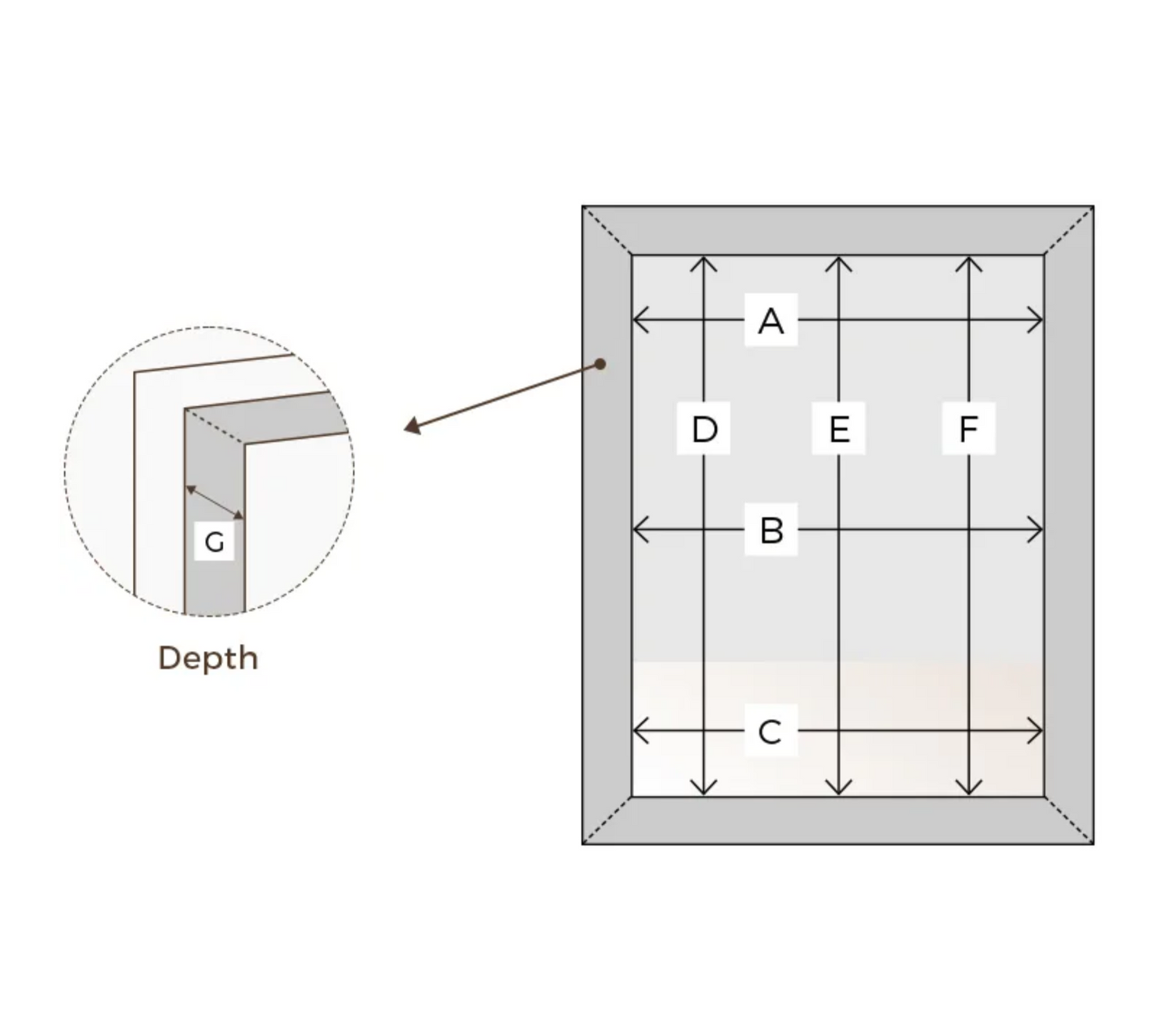
- Depth: Measure inside casing depth at the top for inside or flush mount suitability. Depth needs vary by shade.
- Width: Measure top, middle, and bottom; round down to the nearest 1/8 inch.
- Length: Measure left, center, and right; round up to the nearest 1/8 inch, using the largest measurement.
Note on Deduction
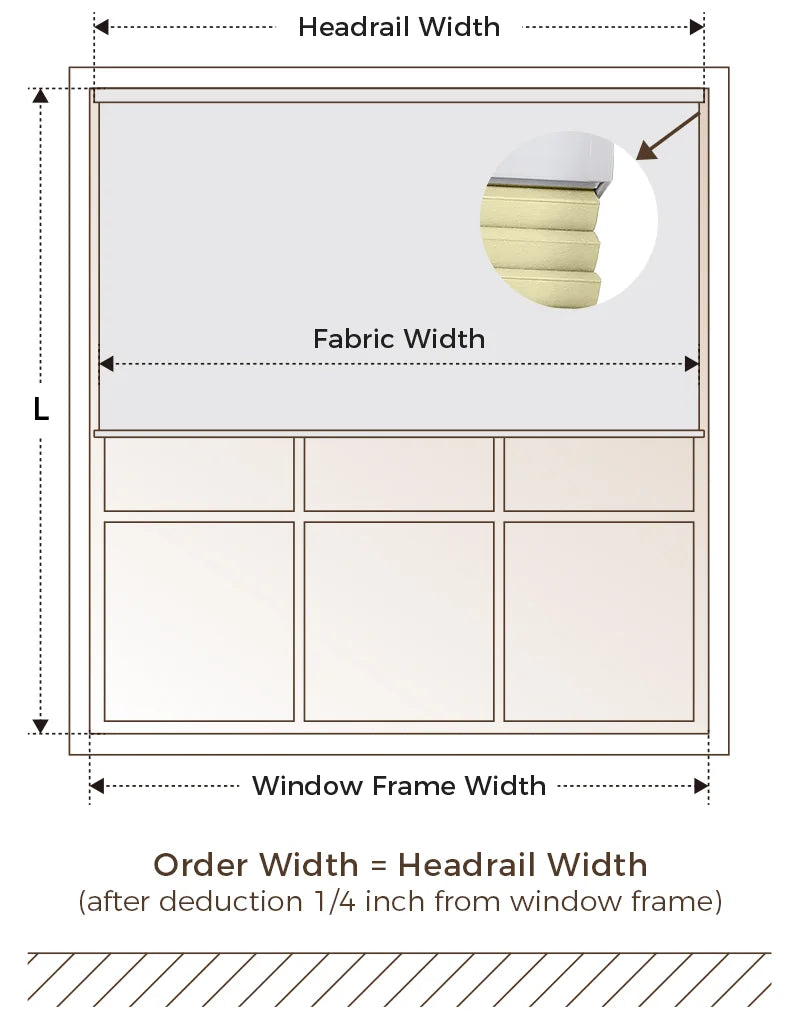
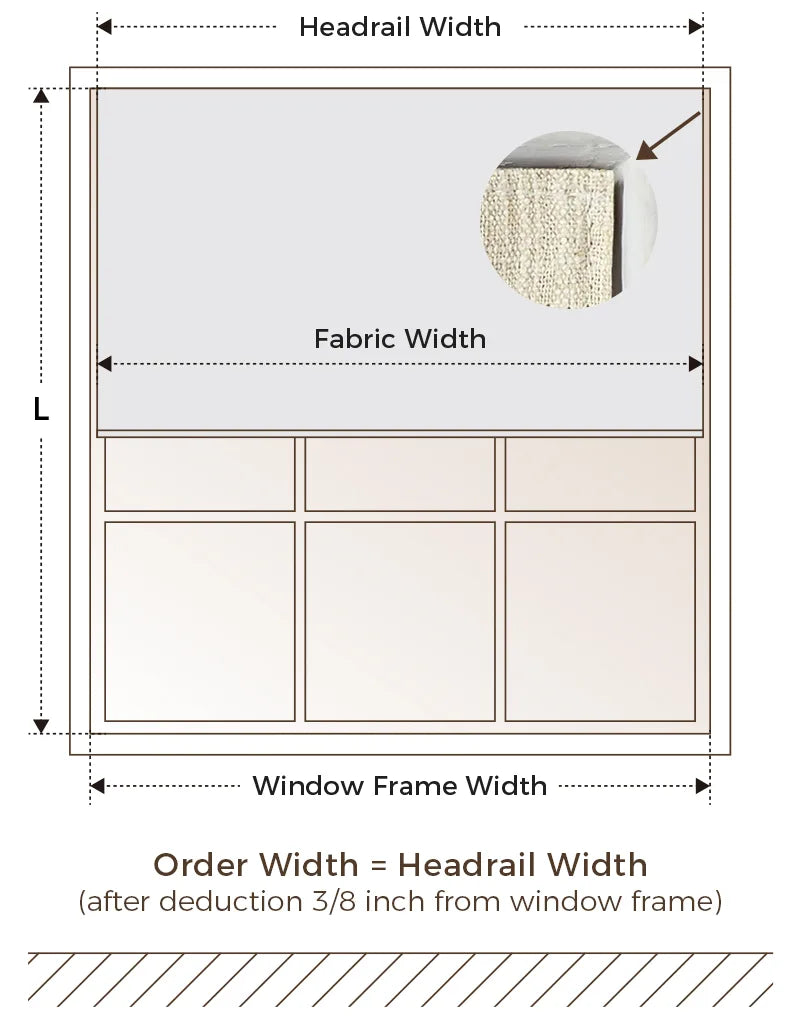
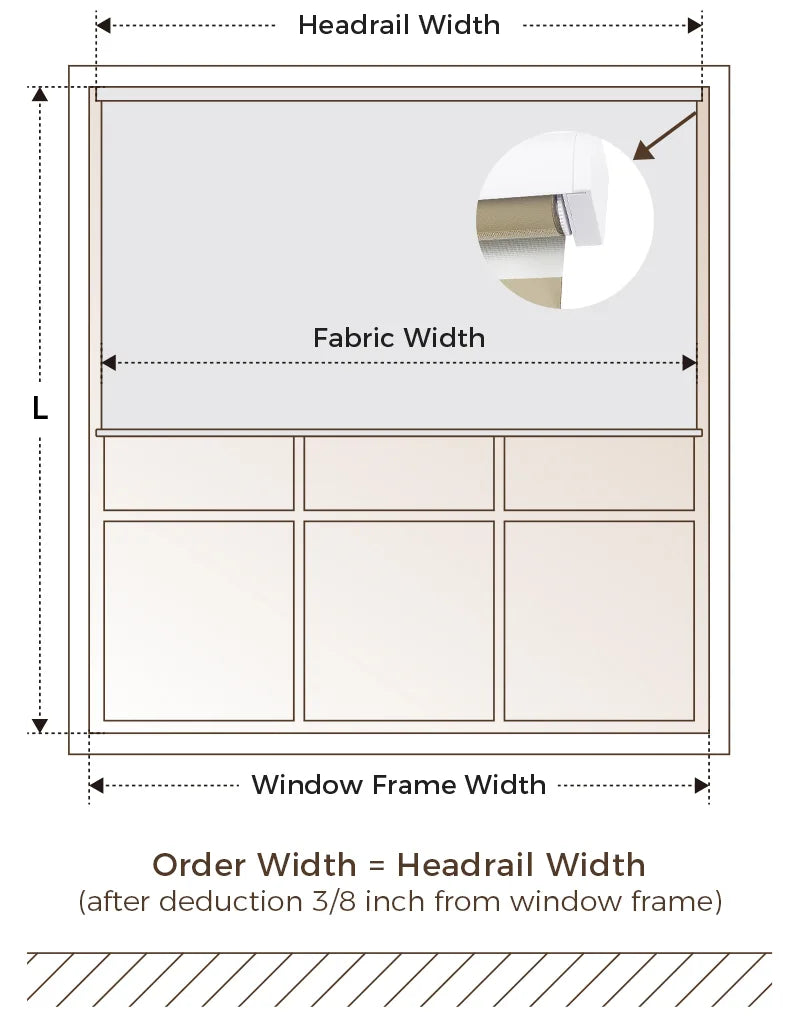
Inside-Mount Deduction by Shade Type
| Shade Type | ||
|---|---|---|
| Cellular / Venetian Blinds | ||
| Roller / Zebra Shades | ||
| Roman / Bamboo Shades |
Measure the Window for Outside Mount
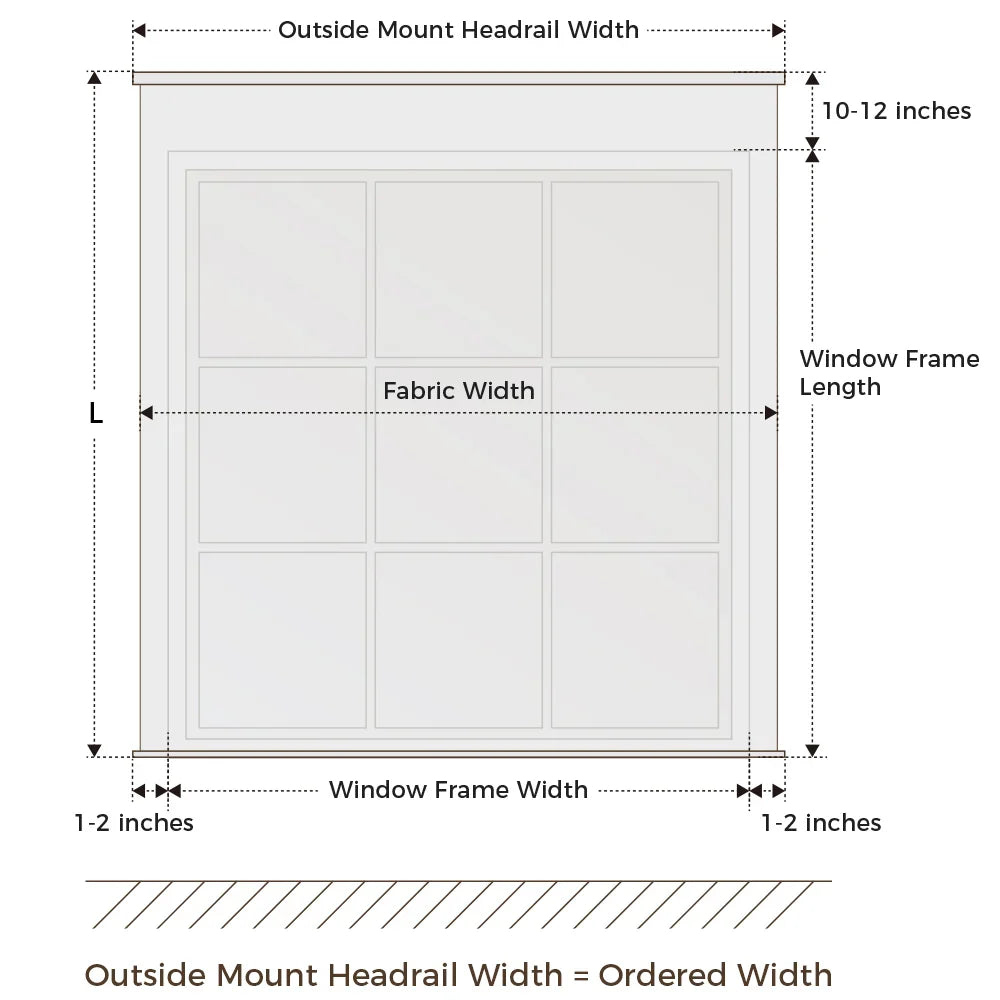
- Check Space: Measure the height above the window to ensure enough room for secure headrail and bracket installation.
- Width: Measure the window's outer frame width. Add 2-4 inches total to reduce light gaps if space allows—this is your ordering width.
- Length: Measure the window's outer frame height. Mount 10-12 inches above the frame, if possible, to account for stack height and maximize exposure.
Still not 100% sure about your measurements?
How to Measure Odd-Shaped Windows & Shades

Need help with your exact window?
Text: +1 (689) 231-1581 | Email: support@easeeasecurtains.com
Read the Full Odd-Shaped Windows GuideScope & What This Guide Does Not Cover
Shade Measuring FAQ
What is the difference between inside and outside mount for shades?
How much window depth do I need for an inside-mount shade?
Why is my finished shade narrower than the window I measured?
How should I round my shade measurements?
How much bigger should an outside-mount shade be than the window?
How do I measure an arched, skylight or odd-shaped window for shades?
EaseEase Curtain Tips & Tricks
View all-

6 Types of Curtain Hooks: Which One Is Right for Your Curtains?
Explore six types of curtain hooks, their compatible curtain headers, and practical tips for pleated, ruffled, flat panel, and ripple fold drapery.
6 Types of Curtain Hooks: Which One Is Right for Your Curtains?
Explore six types of curtain hooks, their compatible curtain headers, and practical tips for pleated, ruffled, flat panel, and ripple fold drapery.
-

Do Linen Curtains Shrink? A Custom Curtain Maker's Honest Answer
Untreated linen shrinks 7-10% on its first wash and typical pre-washed linen 3-5%. EaseEase pre-shrinks its linen to 1-3%, and its linen blends don't shrink at all. Here's how much...
Do Linen Curtains Shrink? A Custom Curtain Maker's Honest Answer
Untreated linen shrinks 7-10% on its first wash and typical pre-washed linen 3-5%. EaseEase pre-shrinks its linen to 1-3%, and its linen blends don't shrink at all. Here's how much...
-

Matter vs. HomeKit vs. Alexa vs. Google Home: How to Choose Smart Motorized Shades
Upgrading to smart motorized shades? Compare Matter, HomeKit, Alexa and Google Home, see why premium motors matter, and get a simple path from choosing to ordering.
Matter vs. HomeKit vs. Alexa vs. Google Home: How to Choose Smart Motorized Shades
Upgrading to smart motorized shades? Compare Matter, HomeKit, Alexa and Google Home, see why premium motors matter, and get a simple path from choosing to ordering.
-

Why "100% Blackout" Roman Shades Get Called Fake — And the Seam Lines No One Warns You About
Your "100% blackout" Roman shade glows in horizontal stripes at sunrise. It isn't defective — it was sewn that way. Here's the real cause, why outside mounting makes it worse,...
Why "100% Blackout" Roman Shades Get Called Fake — And the Seam Lines No One Warns You About
Your "100% blackout" Roman shade glows in horizontal stripes at sunrise. It isn't defective — it was sewn that way. Here's the real cause, why outside mounting makes it worse,...


